Issue: EXTROPY #5 · Winter 1990
Author: Max T. O'Connor & Simon D. Levy
Pages: 41–47 · 7 scanned pages
Intelligence at Work
INTELLIGENCE AT WORK
Advances in Science
Compiled by Max T. O’Connor & Simon Levy
LIFE EXTENSION AND ENHANCEMENT
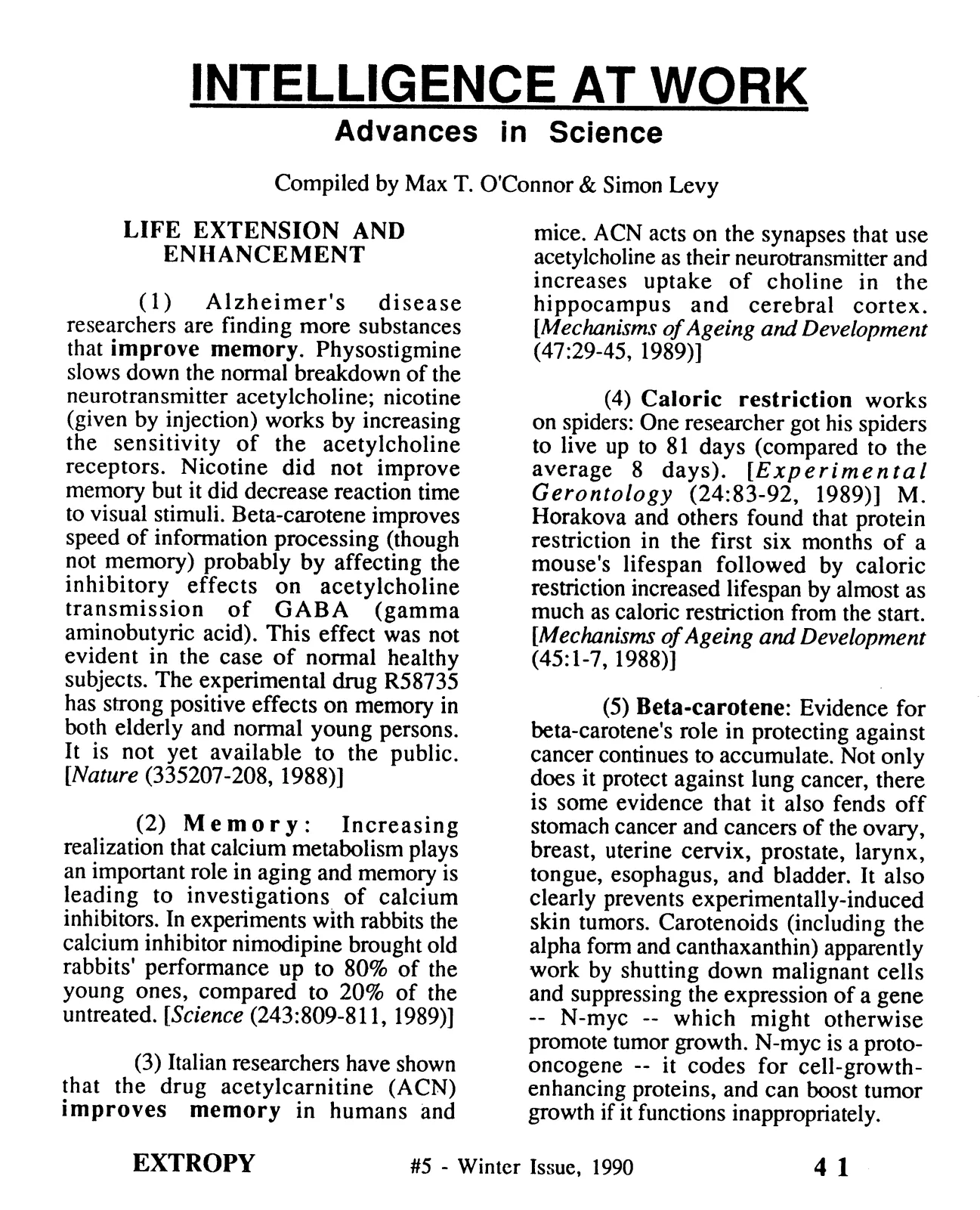
(1) Alzheimer’s disease researchers are finding more substances that improve memory. Physostigmine slows down the normal breakdown of the neurotransmitter acetylcholine; nicotine (given by injection) works by increasing the sensitivity of the acetylcholine receptors. Nicotine did not improve memory but it did decrease reaction time to visual stimuli. Beta-carotene improves speed of information processing (though not memory) probably by affecting the inhibitory effects on acetylcholine transmission of GABA (gamma aminobutyric acid). This effect was not evident in the case of normal healthy subjects. The experimental drug R58735 has strong positive effects on memory in both elderly and normal young persons. It is not yet available to the public. [Nature (335207-208, 1988)]
(2) Memory: Increasing realization that calcium metabolism plays an important role in aging and memory is leading to investigations of calcium inhibitors. In experiments with rabbits the calcium inhibitor nimodipine brought old rabbits’ performance up to 80% of the young ones, compared to 20% of the untreated. [Science (243:809-811, 1989)]
(3) Italian researchers have shown that the drug acetylcarnitine (ACN) improves memory in humans and mice. ACN acts on the synapses that use acetylcholine as their neurotransmitter and increases uptake of choline in the hippocampus and cerebral cortex. [Mechanisms of Ageing and Development (47:29-45, 1989)]
(4) Caloric restriction works on spiders: One researcher got his spiders to live up to 81 days (compared to the average 8 days). [Experimental Gerontology (24:83-92, 1989)] M. Horakova and others found that protein restriction in the first six months of a mouse’s lifespan followed by caloric restriction increased lifespan by almost as much as caloric restriction from the start. [Mechanisms of Ageing and Development (45:1-7, 1988)]
(5) Beta-carotene: Evidence for beta-carotene’s role in protecting against cancer continues to accumulate. Not only does it protect against lung cancer, there is some evidence that it also fends off stomach cancer and cancers of the ovary, breast, uterine cervix, prostate, larynx, tongue, esophagus, and bladder. It also clearly prevents experimentally-induced skin tumors. Carotenoids (including the alpha form and canthaxanthin) apparently work by shutting down malignant cells and suppressing the expression of a gene — N-myc — which might otherwise promote tumor growth. N-myc is a proto-oncogene — it codes for cell-growth-enhancing proteins, and can boost tumor growth if it functions inappropriately.
4 1
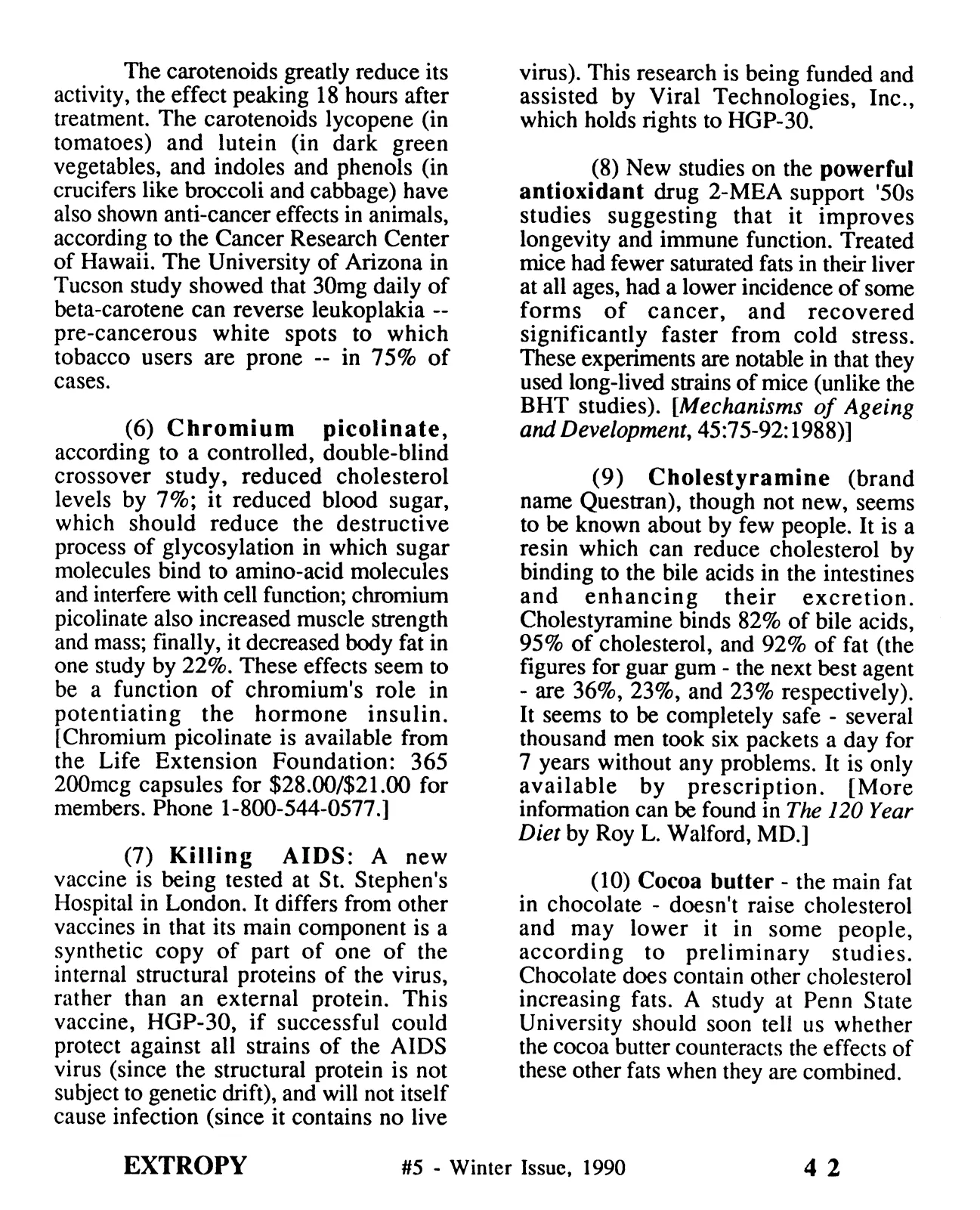
The carotenoids greatly reduce its activity, the effect peaking 18 hours after treatment. The carotenoids lycopene (in tomatoes) and lutein (in dark green vegetables, and indoles and phenols (in crucifers like broccoli and cabbage) have also shown anti-cancer effects in animals, according to the Cancer Research Center of Hawaii. The University of Arizona in Tucson study showed that 30mg daily of beta-carotene can reverse leukoplakia — pre-cancerous white spots to which tobacco users are prone — in 75% of cases.
(6) Chromium picolinate, according to a controlled, double-blind crossover study, reduced cholesterol levels by 7%; it reduced blood sugar, which should reduce the destructive process of glycosylation in which sugar molecules bind to amino-acid molecules and interfere with cell function; chromium picolinate also increased muscle strength and mass; finally, it decreased body fat in one study by 22%. These effects seem to be a function of chromium’s role in potentiating the hormone insulin. [Chromium picolinate is available from the Life Extension Foundation: 365 200mcg capsules for $28.00/$21.00 for members. Phone 1-800-544-0577.]
(7) Killing AIDS: A new vaccine is being tested at St. Stephen’s Hospital in London. It differs from other vaccines in that its main component is a synthetic copy of part of one of the internal structural proteins of the virus, rather than an external protein. This vaccine, HGP-30, if successful could protect against all strains of the AIDS virus (since the structural protein is not subject to genetic drift), and will not itself cause infection (since it contains no live virus). This research is being funded and assisted by Viral Technologies, Inc., which holds rights to HGP-30.
(8) New studies on the powerful antioxidant drug 2-MEA support ’50s studies suggesting that it improves longevity and immune function. Treated mice had fewer saturated fats in their liver at all ages, had a lower incidence of some forms of cancer, and recovered significantly faster from cold stress. These experiments are notable in that they used long-lived strains of mice (unlike the BHT studies). [Mechanisms of Ageing and Development, 45:75-92:1988]
(9) Cholestyramine (brand name Questran), though not new, seems to be known about by few people. It is a resin which can reduce cholesterol by binding to the bile acids in the intestines and enhancing their excretion. Cholestyramine binds 82% of bile acids, 95% of cholesterol, and 92% of fat (the figures for guar gum - the next best agent - are 36%, 23%, and 23% respectively). It seems to be completely safe - several thousand men took six packets a day for 7 years without any problems. It is only available by prescription. [More information can be found in The 120 Year Diet by Roy L. Walford, MD.]
(10) Cocoa butter - the main fat in chocolate - doesn’t raise cholesterol and may lower it in some people, according to preliminary studies. Chocolate does contain other cholesterol increasing fats. A study at Penn State University should soon tell us whether the cocoa butter counteracts the effects of these other fats when they are combined.
4 2
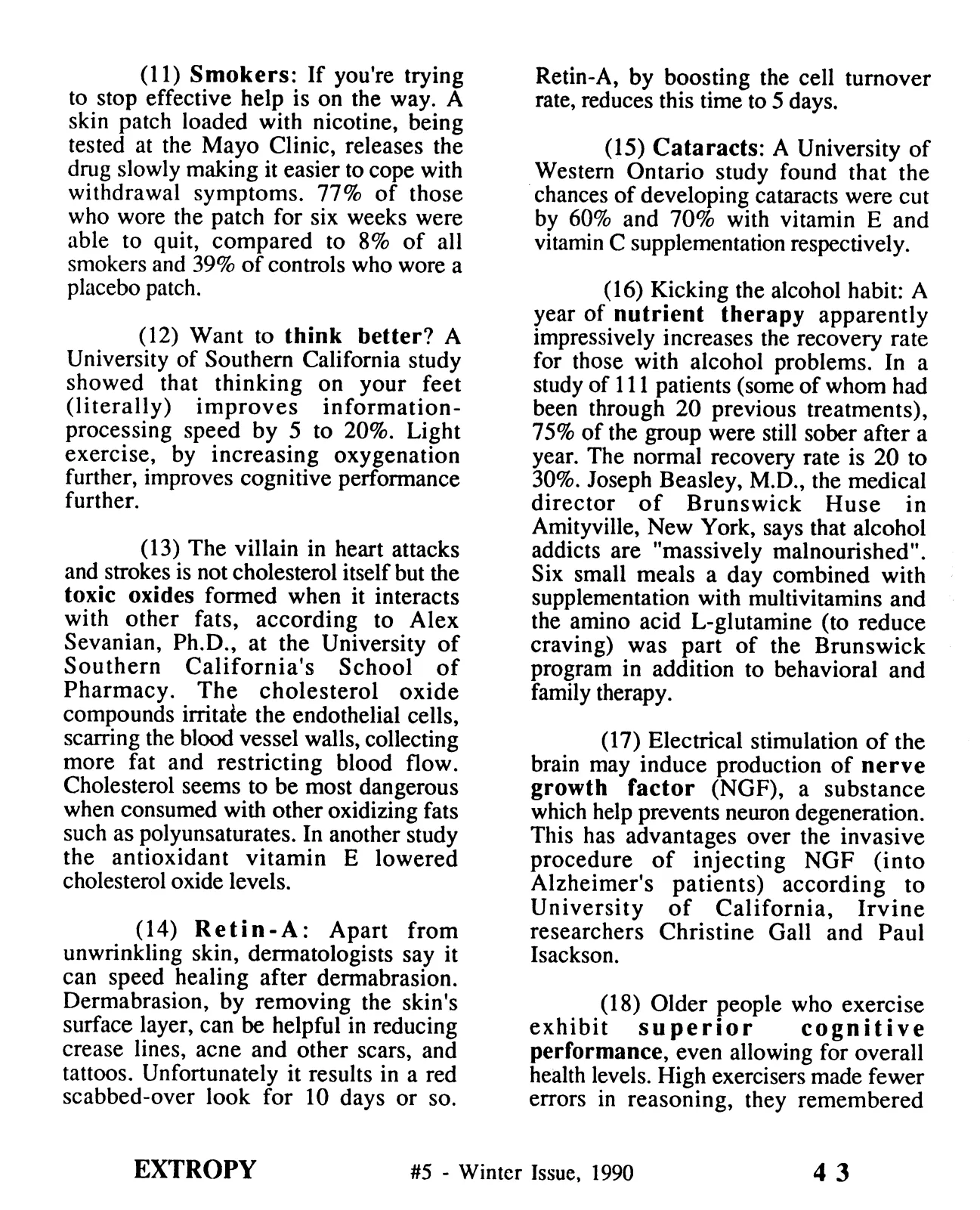
(11) Smokers: If you’re trying to stop effective help is on the way. A skin patch loaded with nicotine, being tested at the Mayo Clinic, releases the drug slowly making it easier to cope with withdrawal symptoms. 77% of those who wore the patch for six weeks were able to quit, compared to 8% of all smokers and 39% of controls who wore a placebo patch.
(12) Want to think better? A University of Southern California study showed that thinking on your feet (literally) improves information-processing speed by 5 to 20%. Light exercise, by increasing oxygenation further, improves cognitive performance further.
(13) The villain in heart attacks and strokes is not cholesterol itself but the toxic oxides formed when it interacts with other fats, according to Alex Sevanian, Ph.D., at the University of Southern California’s School of Pharmacy. The cholesterol oxide compounds irritate the endothelial cells, scarring the blood vessel walls, collecting more fat and restricting blood flow. Cholesterol seems to be most dangerous when consumed with other oxidizing fats such as polyunsaturates. In another study the antioxidant vitamin E lowered cholesterol oxide levels.
(14) Retin-A: Apart from unwrinkling skin, dermatologists say it can speed healing after dermabrasion. Dermabrasion, by removing the skin’s surface layer, can be helpful in reducing crease lines, acne and other scars, and tattoos. Unfortunately it results in a red scabbed-over look for 10 days or so.
Retin-A, by boosting the cell turnover rate, reduces this time to 5 days.
(15) Cataracts: A University of Western Ontario study found that the chances of developing cataracts were cut by 60% and 70% with vitamin E and vitamin C supplementation respectively.
(16) Kicking the alcohol habit: A year of nutrient therapy apparently impressively increases the recovery rate for those with alcohol problems. In a study of 111 patients (some of whom had been through 20 previous treatments), 75% of the group were still sober after a year. The normal recovery rate is 20 to 30%. Joseph Beasley, M.D., the medical director of Brunswick Huse in Amityville, New York, says that alcohol addicts are ‘massively malnourished’. Six small meals a day combined with supplementation with multivitamins and the amino acid L-glutamine (to reduce craving) was part of the Brunswick program in addition to behavioral and family therapy.
(17) Electrical stimulation of the brain may induce production of nerve growth factor (NGF), a substance which help prevents neuron degeneration. This has advantages over the invasive procedure of injecting NGF (into Alzheimer’s patients) according to University of California, Irvine researchers Christine Gall and Paul Isackson.
(18) Older people who exercise exhibit superior cognitive performance, even allowing for overall health levels. High exercisers made fewer errors in reasoning, they remembered
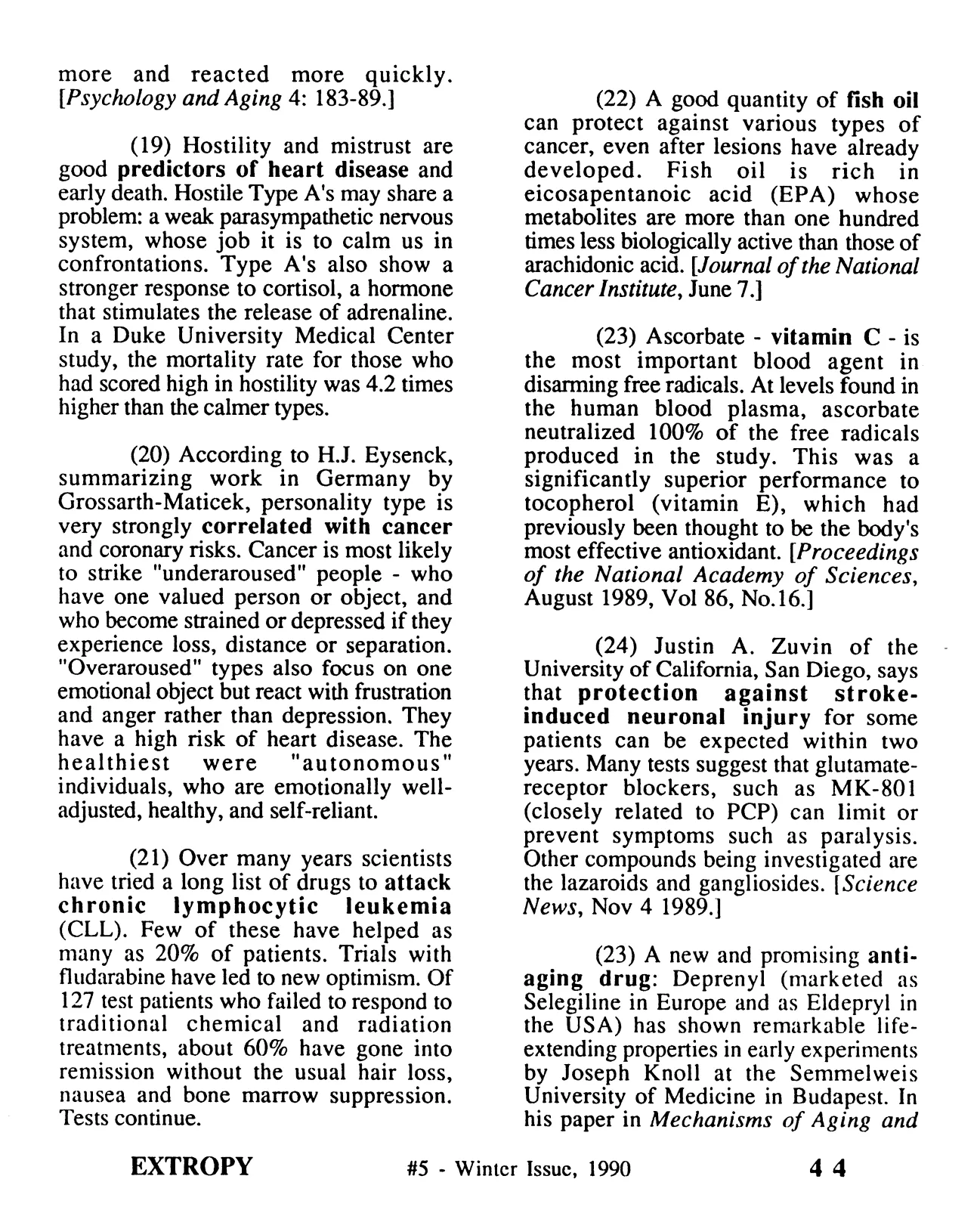
4 3 more and reacted more quickly.
(19) Hostility and mistrust are good predictors of heart disease and early death. Hostile Type A’s may share a problem: a weak parasympathetic nervous system, whose job it is to calm us in confrontations. Type A’s also show a stronger response to cortisol, a hormone that stimulates the release of adrenaline. In a Duke University Medical Center study, the mortality rate for those who had scored high in hostility was 4.2 times higher than the calmer types.
(20) According to H.J. Eysenck, summarizing work in Germany by Grossarth-Maticek, personality type is very strongly correlated with cancer and coronary risks. Cancer is most likely to strike ‘underaroused’ people - who have one valued person or object, and who become strained or depressed if they experience loss, distance or separation. ‘Overaroused’ types also focus on one emotional object but react with frustration and anger rather than depression. They have a high risk of heart disease. The healthiest were ‘autonomous’ individuals, who are emotionally well-adjusted, healthy, and self-reliant.
(21) Over many years scientists have tried a long list of drugs to attack chronic lymphocytic leukemia (CLL). Few of these have helped as many as 20% of patients. Trials with fludarabine have led to new optimism. Of 127 test patients who failed to respond to traditional chemical and radiation treatments, about 60% have gone into remission without the usual hair loss, nausea and bone marrow suppression. Tests continue.
(22) A good quantity of fish oil can protect against various types of cancer, even after lesions have already developed. Fish oil is rich in eicosapentanoic acid (EPA) whose metabolites are more than one hundred times less biologically active than those of arachidonic acid. [Journal of the National Cancer Institute, June 7.]
(23) Ascorbate - vitamin C - is the most important blood agent in disarming free radicals. At levels found in the human blood plasma, ascorbate neutralized 100% of the free radicals produced in the study. This was a significantly superior performance to tocopherol (vitamin E), which had previously been thought to be the body’s most effective antioxidant. [Proceedings of the National Academy of Sciences, August 1989, Vol 86, No.16.]
(24) Justin A. Zuvin of the University of California, San Diego, says that protection against stroke-induced neuronal injury for some patients can be expected within two years. Many tests suggest that glutamate-receptor blockers, such as MK-801 (closely related to PCP) can limit or prevent symptoms such as paralysis. Other compounds being investigated are the lazaroids and gangliosides. [Science News, Nov 4 1989.]
(23) A new and promising anti-aging drug: Deprenyl (marketed as Selegiline in Europe and as Eldepryl in the USA) has shown remarkable life-extending properties in early experiments by Joseph Knoll at the Semmelweis University of Medicine in Budapest. In his paper in Mechanisms of Aging and
4 4
Development, Knoll reports that the 66 rats receiving Deprenyl had an average lifespan exceeding that of the maximum lifespan of the controls. This was despite the treatment having been started in the last half of the rats’ lifespans. Deprenyl inhibits breakdown of dopamine, especially in the striatum. More experiments are needed to confirm Knoll’s early results. (See Thomas Donaldson’s report in Life Extension Report - see Resources.)
COMPUTING, NANOTECHNOLOGY, MICROMACHINES
(1) The Human Genome Initiative is a vital international project to map the 3 billion DNA bases of the human genome. At an April 1989 conference of experts, Leroy Hood, Director of the National Science Foundation’s Science and Technology Center for Integrated Protein and Nucleic Acid Chemistry and Biological Computation at CalTech, suggested that the entire human genome could be sequenced in 11-15 years with the advent of faster computers. Walter Gilbert, a Nobel Laureate from Harvard, went further, saying that the task may be completed by the mid-1990s. Given the increasing evidence for the genetic basis for much of aging, this is exciting indeed.
(2) At the same conference the after-dinner speaker was nanotech luminary Eric Drexler. Drexler’s ideas brought no major disagreements from the distinguished audience. In view of the unexpectedly rapid breakthrough in the protein-folding problem (achieved by Bill DelGrotto’s group at DuPont), Drexler has revised downwards his estimate for the availability of general molecular assemblers to LESS THAN 30 YEARS. Let’s keep pressing that accelerator…
(3) When was the last time you had a talk with your computer? Dragon Systems, Inc., in Newton, Mass., is making it easy. Their DragonDictate (which will run on a 386 processor) handles 30,000 words, adjusting its vocabulary to the words used most often by its owner. It also automatically adapts to a user’s accent or language peculiarities.
(4) Chemists at Harvard University have made a number of “chemzymes” - small, fairly simple molecules that can do the extremely useful things that enzymes do. They expect the result to be more efficient and cheaper synthesis of drugs, vitamins, and other chemicals. The researchers are using chemzymes to eliminate undesired by-products of reactions.
(5) 2 million cylindrical lasers, each about a twentieth the girth of a human hair and a tenth of a hair-width in height, have been packed onto a chip the size of a dime. The laser forest was created by molecular beam epitaxy to grow carefully regulated semiconductor chips. Alternate layers of gallium arsenide and aluminum arsenide are stacked to form two mirror-like regions, then the individual layers are chiselled out by several processes. These devices will allow the speeding up of computing and communications by making possible otherwise inaccessible light-based technologies.
4 5
(6) More memory expansion: A flat optical memory chip will be able to store 250 million bits of information (equivalent to about 400 issues of Extropy). In the August 25 issue of Science, chemists Peter Rentzepis and Dimitri Parthenopoulos propose a method of storing more than 6 trillion bits (about 9.6 million issues of Extropy). Their idea is to embed photochromic chemicals - which change color when illuminated - inside transparent plastic cubes. Lasers would be used to record data as colored and uncolored dots in the cube. They say that much hard work lies ahead before such devices can be built.
OTHER ADVANCES
(1) Raising children: Adolescents turn out best if given strong support and firm direction by their parents, reported Diana Baumrind of the University of California, Berkeley at this year’s American Psychological Association meeting. Children with ‘authoritative’ parents — those giving strong support and firm direction — were the highest achieving and most confident. A ‘democratic’ approach, involving support but little directional control, led to children with high self-esteem and competence but higher chances of heavy involvement with drugs. ‘authoritarian’ (low support, high control, ‘unengaged’ (low support, low control), and ‘nondirective’ (low control, medium support) styles produced children likelier to be low achievers, self-doubting and unhappy.
(2) Neuronauts note: MDMA (methylene-dioxy-methamphetamine), a drug also known as XTC or Adam, is now undergoing tests for usefulness and neurotoxicity in Switzerland. Preliminary human tests support contentions that MDMA can help in treatment of various disorders, including phobias, neuroticism, and obsessive-compulsive disorder.
Neurotoxicity is also being investigated by George Ricaurte at John Hopkins. So far his research on animals has shown no neurotoxicity in primates at doses several times that taken by humans. Last year Ricaurte found that though serotonin levels fell in monkeys following intensive administration of the drug, after ten weeks there had been considerable recovery. Mark Geyer of UCSD found that there were no behavioral abnormalities even in rats given repeated doses four times the average human dose. Two studies are currently under way in the U.S..
(3) Heavy pot-smokers beware: Studies on marijuana-abusing children at the Georgetown University School of Medicine, indicated that the heavy pot smokers did much worse on tests of short-term memory than did users of other drugs or no drugs. Six weeks after cessation of usage there was some improvement, but impairment was still evident. If you like to smoke, keep the quantity low; and remember that water pipes filter out most of the carcinogenic material.
(4) There are many millions of times more living things on our planet than previously thought, according to Gunnar Bratbak and colleagues at the University of Bergen in Norway. Viral concentrations in marine and freshwater environments are 10 million times those previously recorded. In the
4 6
August 10 Nature they reported that 1 teaspoon of North Atlantic seawater taken from 10 meters down contained 75 million viruses. There were more than one billion viruses in a teaspoon of water from a nutrient-rich lake.
(5) New crystalline materials harder than diamond may be available very soon. Researchers at the University of California, Berkeley can predict compressibility on the basis of the length of bonds connecting the constituent atoms and their arrangement. Such materials will allow us to intricately shape diamonds for use in electronic and other applications.
(6) Advances are being made towards using photoreceptor transplants to restore vision. [Investigative Ophthalmology & Visual Science, August 1989, and Science News Nov 4 1989.]
(7) Lenses get smaller: Advanced grinding has produced crystalline flakes only six times the surface area of this ‘s’ which accommodate more than 1000 lenses, each about 130 microns across. These thousand-eye chips, made of gallium arsenide, will be helpful for hybrid optical/electronic computers, sensors, and communication devices. [Applied Physics Letters, July 10 1989.]
(8) Plastics may be used to generate power. Engineers George W. Taylor and Joseph R. Burns of Ocean Power Technologies, Inc., foresee a new power-generating technology called hydropiezoelectricity. This would use piezoelectric slabs to transform wave motion into electricity. Each pound of the material could generate 2 watts; a 1-megawatt facility would need about 220 tons of the material.
=====
Our Enemy, ‘The State’
Alfred J. Nock emphasized the difference between ‘government,’ the social order that arises spontaneously from the undirected actions of self-interested individuals, and ‘the State’: ‘The nature and intention of government, as adduced by Parkman, Schoolcraft and Spencer, are social. Based on the idea of natural rights, government secures those rights to the individual by strictly negative intervention, making justice costless and easy to access; and beyond that it does not go. The State, on the other hand, both in its genesis and by its primary intention, is purely anti-social. It is not based on the idea of natural rights, but on the idea that the individual has no rights except those that the State may provisionally grant him. It has always made justice costly and difficult to access, and has invariably held itself above justice and common morality whenever it could advantage itself by so doing… . Taking the State wherever found, striking into its history at any point, one sees no way to differentiate the activities of its founders, administrators and beneficiaries from those of a professional-criminal class.’ (Our Enemy, the State, [Delevan, Wisconsin: Hallberg Publishing, 1983, originally published 1935] p. 42 footnotes omitted)
VIEW ORIGINAL SCAN (7 pages)